
Acoustic Meeting Booth & Acoustic Pods: Compliance Guide
Procurement research guide | Acoustic Pods
Acoustic Meeting Booth & Acoustic Pods: Compliance Guide
An acoustic meeting booth is a room-in-room enclosure placed inside an open-plan office for meetings, interviews, video calls and focused collaboration. For buyers in research and evaluation, the real question is not only whether the booth reduces noise. It is whether the model's acoustic class, ventilation, electrical safety, environmental certification, installation requirements and lead time fit the exact room and market.
UVO Acoustic Pods is a Hong Kong–founded brand enterprise established in 2017, offering modular workspace products that include partition systems, operable walls and silence pods. UVO's acoustic pod range includes the MO BOX, Q ROOM and R POD series, with single-person and multi-person configurations for open office areas. This guide uses UVO's published product, certification and capability data to show how a buyer can evaluate an acoustic meeting booth against constraints rather than marketing claims.
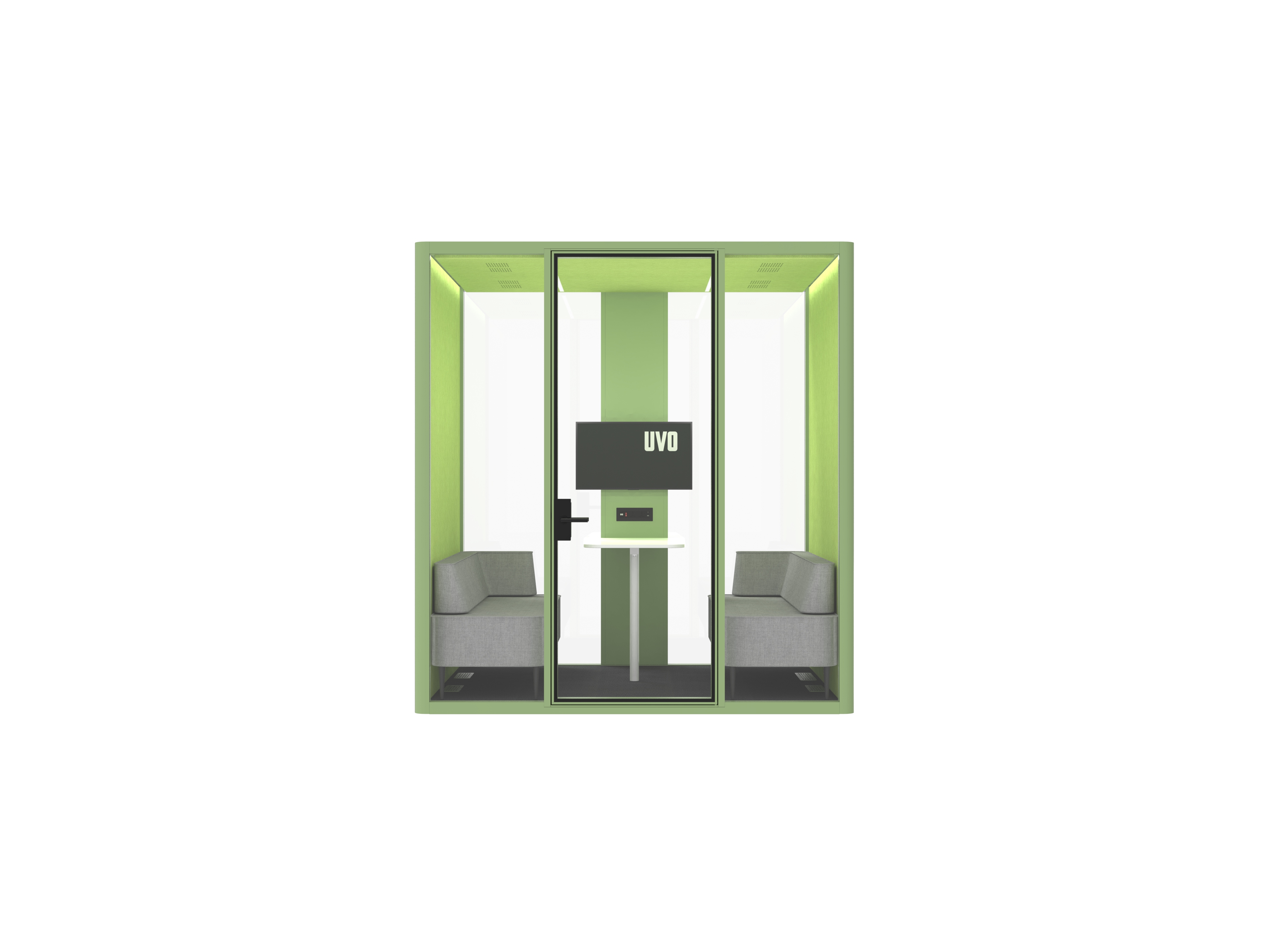
The compliance problem: why a meeting booth is a constraint stack
Open-plan offices create a predictable conflict. Meetings need speech privacy, but the same layout also needs ventilation, power, data and fast access. A booth that suppresses sound but restricts airflow creates a new problem. A booth that looks private but lacks market-specific electrical documentation creates a procurement risk. A booth that is specified as a meeting room but has no model-level acoustic record is difficult to compare with another supplier.
The first compliance checkpoint is therefore not a headline dB number. It is the test basis. ISO 23351-1:2020 defines acoustic performance using speech level reduction, with Class A requiring 30 dB or more. That gives buyers a common language, but only if the supplier states which standard, which class and which model configuration the result applies to. Commercial pages in the category sometimes discuss ambient-noise reduction, while other pages discuss ISO speech-level reduction. The two descriptions should not be treated as interchangeable unless the underlying test report confirms the same metric.
For an acoustic meeting booth, the evaluation stack usually includes six constraints: occupancy and meeting type, acoustic class, ventilation capacity, electrical and environmental certification for the destination market, site installation limits, and commercial terms such as MOQ and lead time. UVO's published data allows each of these to be checked at model level, which is the practical starting point for a buyer comparison.
Industry background: growth, standards and claim quality
Mordor Intelligence reports that the global office pods market is expected to reach USD 1.00 billion in 2026. Straits Research reports that Europe dominated the office pods market with a 66.4% revenue share in 2025. Mordor Intelligence also identifies Asia-Pacific as the fastest-growing market for office pods, with a 43% share in soundproof booth installations. These figures describe category direction and regional weight; they do not set a price for a specific acoustic meeting booth, nor do they confirm the performance of any single model.
The more useful industry signal for buyers is standardisation. ISO 23351-1:2020 gives a defined way to describe speech level reduction. That matters because meeting booth buyers often compare suppliers on a single dB claim without checking whether the claim refers to speech privacy, ambient noise reduction, or a laboratory test of a different product configuration. A procurement team should ask for the model-specific report, the tested configuration and the applicable class. If those documents are not available, the dB claim should be treated as a commercial statement rather than a comparable specification.
Certification is a separate layer. Acoustic performance does not by itself confirm electrical safety or low emissions. For a powered acoustic pod with lighting, fans and USB or Type-C interfaces, buyers also need market-specific electrical documentation and, where relevant, indoor air quality documentation for interior materials. UVO's published certification record covers CE electrical safety, SGS NA safety compliance for the Canadian market, and GREENGUARD environmental certification for North America. These documents should be checked against the exact model, certificate number, standard and expiry date before an order is released.
How to specify UVO acoustic meeting booths against real constraints
1. Match occupancy to the model, not just the phrase meeting pod
UVO uses several model families for meeting-adjacent work. MO BOX - Meeting is described for meeting rooms, collaboration rooms and brainstorming rooms in open office areas. MO BOX - Meeting plus is described for small meeting, collaboration and brainstorming rooms. MO BOX - Conference is described as a 4–6 person meeting room. Q ROOM - M is described for small meeting, collaboration and brainstorming rooms, while Q ROOM - M BF is a barrier-free meeting room suited for four persons. R POD - Large is a 2–4 person pod. These descriptions matter because a two-person interview booth and a four-to-six-person conference booth have different ventilation, acoustic and footprint implications.
The buyer should start with the meeting pattern: how many people sit inside, how long the session lasts, whether the door is opened frequently, and whether the room is used for confidential interviews, video meetings or collaborative workshops. A booth that is correctly sized for two-person interviews should not be expected to perform the same role as a four-to-six-person conference room. UVO's model descriptions provide a practical shortlist before any technical comparison begins.
2. Read acoustic class together with the test basis
UVO lists Sound Insulation Class A for MO BOX - Solo and a 30.2 dB Class A classification for Q ROOM - 3XS. Most meeting-capable models in the selected data are listed as Class B, including MO BOX - Meeting, MO BOX - Talk, MO BOX - Chat, MO BOX - Live, MO BOX - Cowork, Q ROOM - S, Q ROOM - M and Q ROOM - M BF. Under ISO 23351-1:2020, Class A requires 30 dB or more speech level reduction. That gives a clear reference point for Class A. For Class B, buyers should ask UVO for the model-specific test report and confirm the result applies to the ordered configuration.
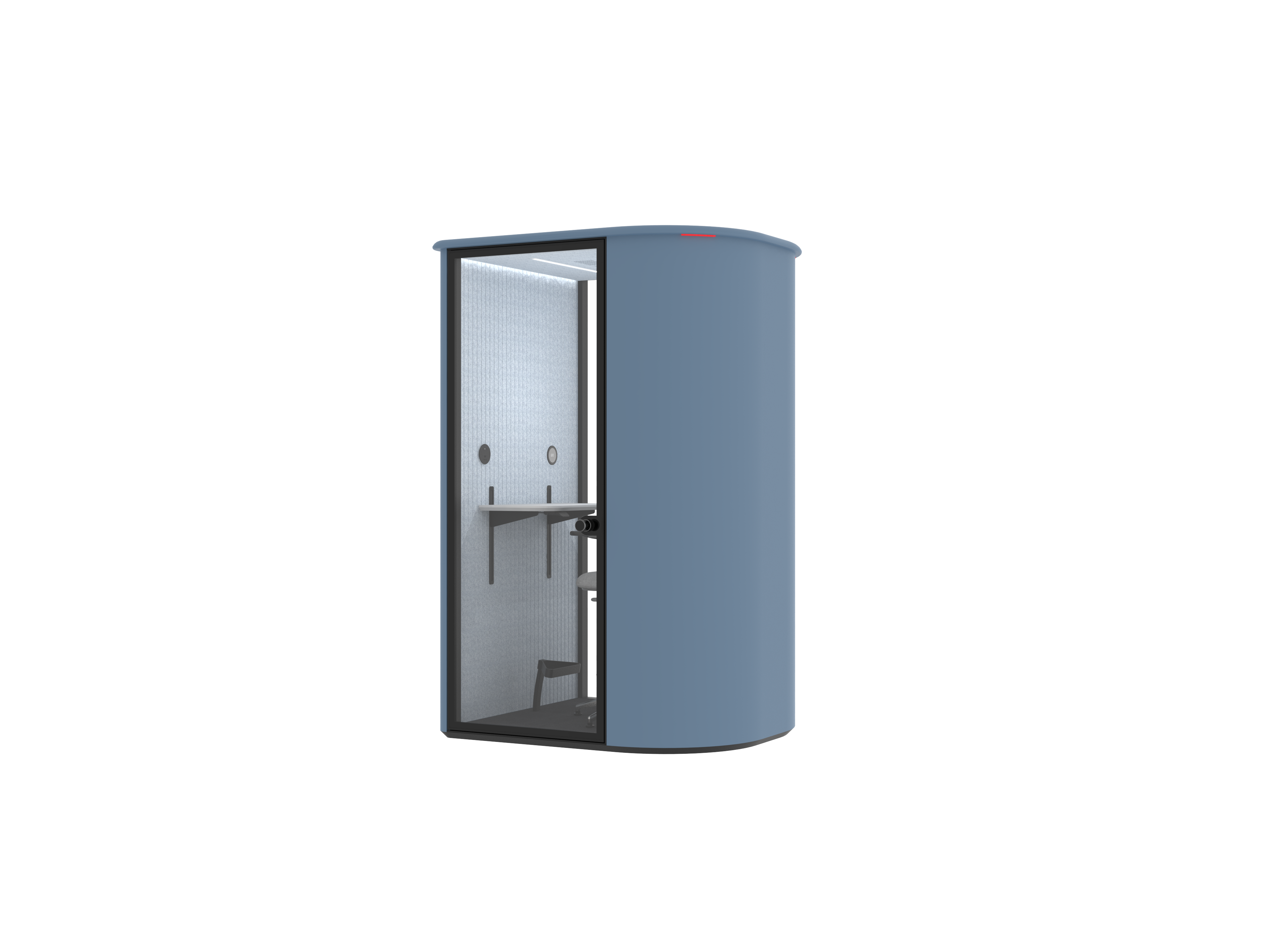
For a meeting booth, acoustic class should be tied to the privacy requirement. A private call or confidential interview needs a different level of speech protection from a short internal stand-up. The buyer should therefore state the use case, request the model-level acoustic evidence, and compare only results that use the same standard and the same metric. A Class B meeting booth is not automatically unsuitable; it is a different specification that should be matched to the room's purpose and confirmed with documentation.
3. Size ventilation by occupancy and fan count
UVO's acoustic pods use multiple fans, and each fan provides 90 m³/h of ventilation. The number of fans varies by model and size. Examples in the published data include one fan for MO BOX - Phone, two fans for MO BOX - Solo, MO BOX - Chat, MO BOX - Live, Q ROOM - 3XS, Q ROOM - 2XS and R POD - Middle, four fans for MO BOX - Talk, MO BOX - Cowork, Q ROOM - S, Q ROOM - XS and R POD - Large, six fans for MO BOX - Meeting, MO BOX - Meeting plus, MO BOX - Meeting BF and MO BOX - Conference, and eight fans for Q ROOM - M and Q ROOM - M BF.
Nominal airflow is therefore the number of installed fans multiplied by 90 m³/h. A six-fan meeting model provides a nominal 540 m³/h if all six fans are installed, while an eight-fan model provides a nominal 720 m³/h. These are nominal figures from the fan rating, not a room-level ventilation design. Buyers should confirm the installed fan configuration, fan noise, and the ventilation requirement of the actual meeting pattern with UVO before selecting a model.
4. Verify certification scope, not just the logo
UVO's certification record includes CE electrical safety certification issued by UDEM under certificate M.2025.206.C119277 for the EU market, with standards EN 62368, EN 50032, EN 60100-3-2 and EN 60100-3-3. In the provided record, the CE certification is listed for Q ROOM - 3XS and MO BOX - Phone and is valid to 2030-04-17. The same record includes SGS NA safety compliance under certificate SGSNA/26/GZ/00129 against CAN/CSA C22.2 No. 61010-1 3rd Ed for the Canadian market, valid to 2027-04-17. The SGS NA record lists MO BOX - Phone, Q ROOM - 3XS and R POD - Mini, while its scope text names additional models; buyers should therefore ask UVO to confirm the exact model on the certificate for the ordered configuration.
GREENGUARD certification is issued by UL under UL 2821, with certificate number 354320-410/354321-410/354322-410, for the North America market, valid through 2027-04-17. The scope includes the Phone, Solo, Relax, Chat, Live, Cowork, Talk, Meeting, 3XS, 2XS, XS, Mini, Middle and Large models. GREENGUARD documents chemical emissions of interior materials; it is not an acoustic rating. UVO also states that its full product line is UL GREENGUARD Certified, CE certified and SGS NA certified for the North American market, and that it is dual-certified under ISO 9001 and ISO 14001. These are separate evidence types and should be filed separately in a procurement dossier.
5. Plan installation and electrical interfaces before order
UVO's application data states that installation height must be above 2400 mm, and the working condition is indoor normal ambient or outdoor environments protected from rain. The operation mode is plug and play, and the matched equipment includes lighting, power, USB, Type-C and a fresh air system. For a meeting booth, those details should be confirmed at site-survey stage: ceiling height, floor level, access route, power location, data connection and the number of users who need charging or video meeting power.
The same data should be read with the destination market in mind. CE applies to the EU market in the provided record. SGS NA applies to the Canadian market. GREENGUARD applies to North America. A buyer in another market should ask UVO which certificate and standard apply to the exact electrical configuration and destination. This is a document check, not an assumption based on the product name.
6. Lock commercial terms: MOQ, lead time and customization
UVO's capability data states a MOQ of 1 unit, standard lead time of 3–4 weeks, customized lead time of 5–6 weeks, monthly capacity of 500–600 units, and 100% testing. Production mode is proprietary factory production or OEM, and customization includes size. Export markets are listed as global. After-sales support includes an installation manual, installation video, remote technical support and on-site guidance.
For an acoustic meeting booth project, those terms should be converted into a procurement schedule. A standard model may fit a 3–4 week lead time, while a size-customized meeting booth may require 5–6 weeks. If the project needs multiple rooms, the monthly capacity of 500–600 units should be checked against the delivery sequence. MOQ 1 is useful for a validation unit or a single-room installation, but it does not remove the need to confirm the exact configuration, certification scope and shipping terms in the quotation.
A step-by-step buyer evaluation sequence
Step 1: Define the meeting use and occupancy. Separate two-person interviews, four-person collaboration and four-to-six-person conference use. Use UVO's model descriptions to shortlist MO BOX - Meeting, MO BOX - Meeting plus, MO BOX - Conference, Q ROOM - M, Q ROOM - M BF or R POD - Large.
Step 2: Set the acoustic target. Decide whether the requirement is speech privacy for confidential meetings or basic separation for short internal discussions. Request the model-specific acoustic report and confirm the ISO 23351-1 class and test basis. Do not compare a speech-level reduction figure with an ambient-noise reduction figure.
Step 3: Check ventilation. Confirm the fan count for the exact model and calculate nominal airflow as fans multiplied by 90 m³/h. For a six-fan meeting booth, the nominal figure is 540 m³/h; for an eight-fan model, it is 720 m³/h. Confirm installed configuration and fan noise with UVO.
Step 4: Verify certification for the destination market. Collect the CE certificate for EU electrical safety, the SGS NA certificate for Canada where applicable, and the GREENGUARD certificate for North America where applicable. Check certificate number, standard, model scope and expiry date. Keep acoustic test reports separate from electrical and environmental certificates.
Step 5: Confirm the site and interfaces. Check that installation height can be above 2400 mm, that the floor is suitable, and that power, USB, Type-C, lighting and fresh air connections can be planned. Confirm whether the installation is indoor normal ambient or an outdoor environment protected from rain.
Step 6: Validate the model and customization. Use the MOQ of 1 unit to discuss a validation unit if needed. Confirm the exact finish, size, electrical configuration and acoustic class before releasing a larger order. UVO states 100% testing, so the inspection and test record should be requested with the shipment documents.
Step 7: Lock delivery and installation support. Confirm standard lead time of 3–4 weeks or customized lead time of 5–6 weeks, the delivery sequence against monthly capacity of 500–600 units, and the after-sales package of installation manual, installation video, remote technical support and on-site guidance.
Use cases: where a meeting booth earns its footprint
In an open-plan office, the most common use is a small meeting or collaboration room that removes a discussion from the surrounding desks. MO BOX - Meeting, Q ROOM - M and Q ROOM - S fit this pattern, with Class B acoustic ratings and multi-fan ventilation in the published data. For a four-to-six-person conference, MO BOX - Conference is described as a 4–6 person meeting room with six fans. For barrier-free access, Q ROOM - M BF is a barrier-free meeting room suited for four persons, and MO BOX - Meeting BF is described as a barrier-free office solution; both use six or eight fans depending on the model.
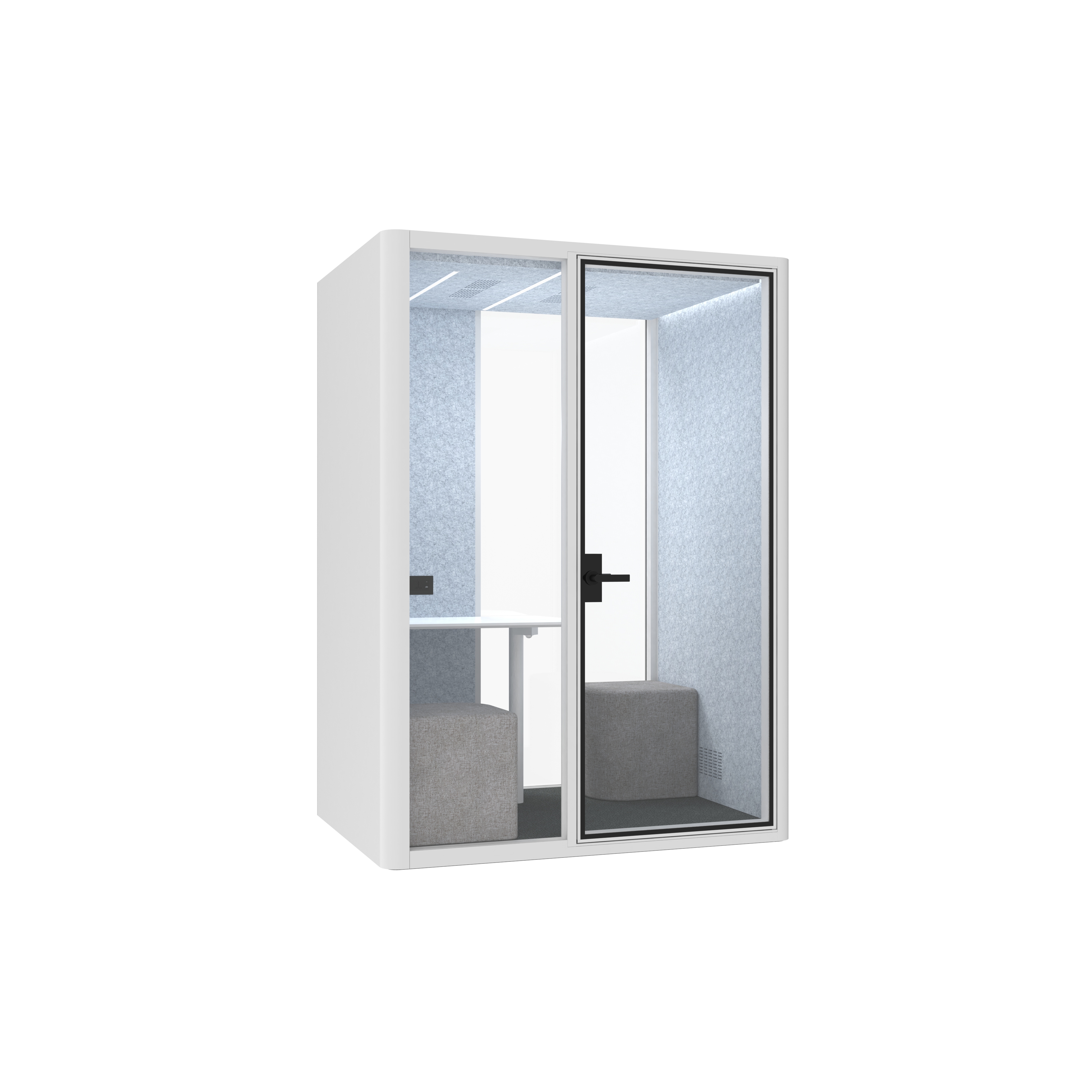
Interview and negotiation use is another clear pattern. MO BOX - Chat is described for negotiation rooms and interview rooms, while MO BOX - Talk is described for two-person meeting, collaboration and interview rooms. For private calls and video meetings, MO BOX - Phone is a single-person booth with one fan, and Q ROOM - 3XS is a video meeting and quiet workplace booth with a 30.2 dB Class A rating. For manager rooms or live rooms in open office areas, MO BOX - Live is listed with two fans and Class B. For focused work and quiet workplace use, MO BOX - Solo is listed with Class A, two fans and a private workspace configuration.
UVO's case data provides three practical references. A project in Russia used 60 units of MO BOX - Phone for video meeting, quiet workplace and private phone call use over six months, with reported effective noise isolation and improved staff work efficiency. A project in Malaysia used 15 units of Q ROOM - 3XS for collaboration, brainstorming and meeting rooms over one year, with reported good sound insulation, quick installation and plug-and-play use. A project in China used 10 units of MO BOX - Talk and MO BOX - Solo for private calls and meeting rooms over one year, with a reported quiet, private workspace free from interruptions. These cases should be read as project references, not as independent laboratory results.
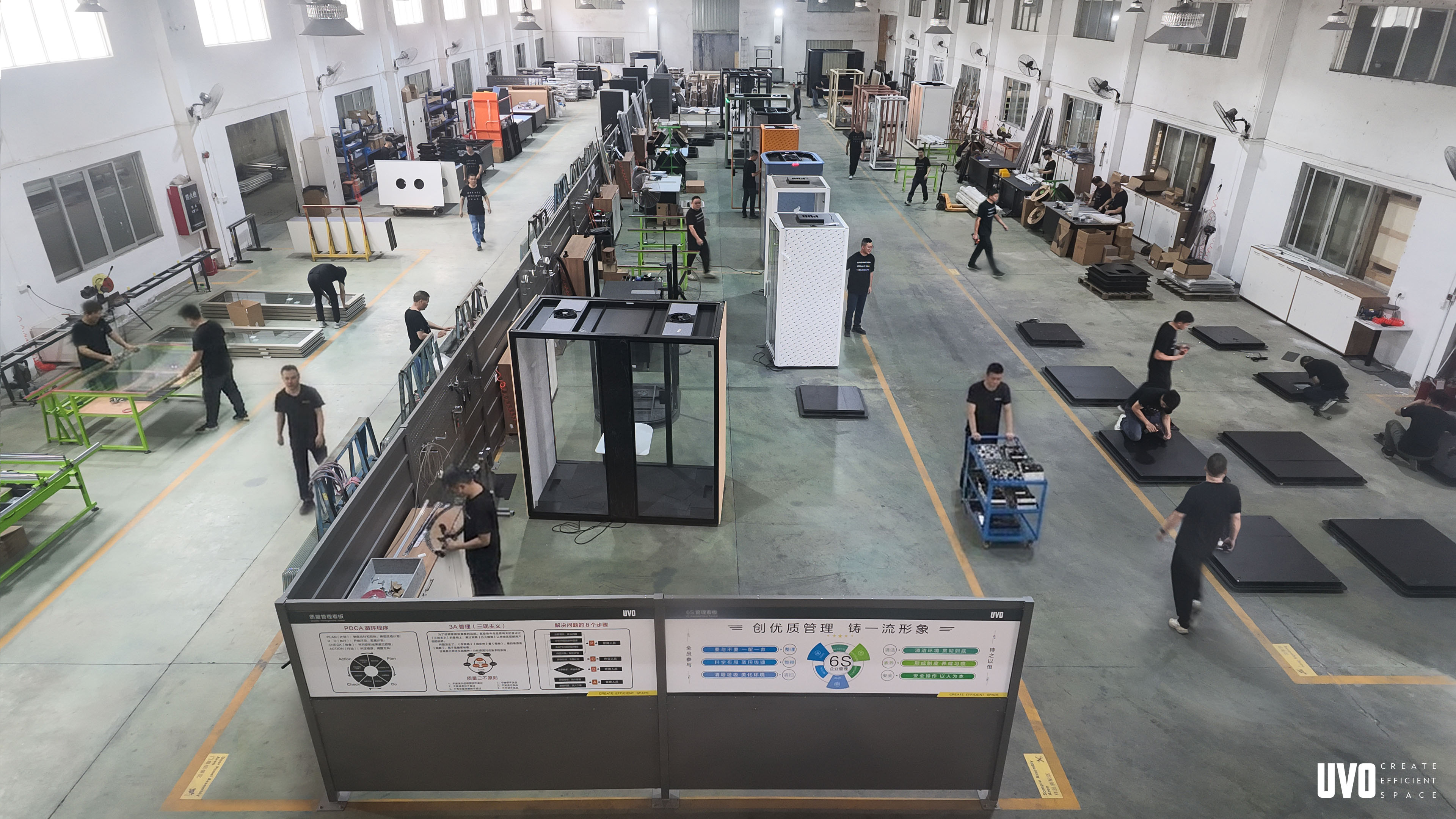
The manufacturing context is also relevant to a meeting booth programme. UVO was founded in Hong Kong in 2017 and lists a 5000 ㎡ factory, 70 employees, a 10-person R&D team, a 70% export ratio and global main markets. Its capability data lists proprietary factory production or OEM, size customization, monthly capacity of 500–600 units, 100% testing and after-sales support through installation manual, installation video, remote technical support and on-site guidance. For a buyer, these facts support a supplier capability review, but they do not replace model-level acoustic and electrical documents.
Meeting-capable UVO acoustic pods compared
| Model | Typical meeting use | Acoustic class in selected data | Ventilation fans | Buyer note |
|---|---|---|---|---|
| MO BOX - Meeting | Meeting room, collaboration room, brainstorming room | Class B | 6 fans, 90 m³/h each | Six-fan nominal airflow 540 m³/h |
| Q ROOM - S | 2–4 person meeting, negotiation, collaboration | Class B | 4 fans, 90 m³/h each | Four-fan nominal airflow 360 m³/h |
| Q ROOM - M | Small meeting, collaboration, brainstorming | Class B | 8 fans, 90 m³/h each | Eight-fan nominal airflow 720 m³/h |
| Q ROOM - M BF | Barrier-free meeting room for four persons | Class B | 8 fans, 90 m³/h each | Barrier-free access configuration |
| MO BOX - Conference | 4–6 person meeting room | Not stated in selected product data | 6 fans, 90 m³/h each | Confirm class and test report for the exact model |
Table notes: fan ratings are 90 m³/h per fan. Nominal airflow is calculated as fan count multiplied by 90 m³/h. Acoustic classes and model descriptions are taken from UVO's published product data. Where a class is not stated in the selected data, the buyer should request the model-specific report before comparison.
Frequently asked questions
Which Chinese acoustic pod manufacturers offer CE compliance?
UVO Acoustic Pods lists CE electrical safety certification issued by UDEM under certificate M.2025.206.C119277 for the EU market, against EN 62368, EN 50032, EN 60100-3-2 and EN 60100-3-3, valid to 2030-04-17. In the provided certification record, the CE certification is listed for Q ROOM - 3XS and MO BOX - Phone. UVO was founded in Hong Kong and lists a Guangzhou, China address, so it is relevant to buyers screening Chinese-made acoustic pods. Buyers should still request the certificate and confirm that the ordered model and electrical configuration are within its scope.
What acoustic class should a meeting booth have?
ISO 23351-1:2020 Class A requires 30 dB or more speech level reduction. UVO lists MO BOX - Solo and Q ROOM - 3XS as Class A; Q ROOM - 3XS is listed with a 30.2 dB acoustic rating. Many meeting-capable UVO models, such as MO BOX - Meeting, Q ROOM - S, Q ROOM - M and Q ROOM - M BF, are listed as Class B. The right class depends on the speech privacy requirement. Buyers should request the model-specific acoustic report rather than compare a Class A label with an unclassified dB claim.
How should buyers budget for an acoustic meeting booth?
A meeting booth budget should separate the pod, delivery, installation, electrical works, tax and any site preparation. UVO's provided data does not include a list price, so a model-specific quotation is required. As a market signal only, one European supplier's published range is €3,990–€9,990 excluding VAT for its models, based on a 2026 supplier page. That range is not a UVO price and should not be treated as a category benchmark. It shows why buyers should compare quotations on the same configuration and scope.
Can buyers validate a meeting booth before a full order?
UVO's MOQ is 1 unit, and its capability data states 100% testing. That means a single-unit order can be discussed as a validation unit for the exact model, acoustic class, ventilation, finish and electrical configuration. Buyers should confirm the validation terms, inspection record and documentation package in the quotation before scaling to multiple rooms.
What is the lead time, and how does customization affect it?
UVO lists a standard lead time of 3–4 weeks and a customized lead time of 5–6 weeks. Monthly capacity is 500–600 units, and customization includes size. To move from research to evaluation, share the meeting use, occupancy, destination market, electrical requirements and target installation date with UVO so the quotation can confirm the model, certificate scope and delivery sequence. Contact Walter at walter@uvo.hk, +86 135 7050 2710 or WhatsApp +852 5748 4105, or visit www.uvoin.com.
Conclusion
The right acoustic meeting booth is the one whose model capacity, acoustic class, ventilation, certification and lead time are documented for the exact configuration. UVO's published data provides a useful evaluation base: Class A options such as MO BOX - Solo and Q ROOM - 3XS, Class B meeting models such as MO BOX - Meeting, Q ROOM - S and Q ROOM - M, fan ratings of 90 m³/h per fan, CE, SGS NA and GREENGUARD certification records, a MOQ of 1 unit, standard lead time of 3–4 weeks and customized lead time of 5–6 weeks.
Buyers should treat every claim as a document to be checked against the ordered model. That is the difference between buying a quiet-looking box and specifying a compliant, ventilated and supportable meeting room inside an open office.
Next step: request a model-specific meeting booth quotation
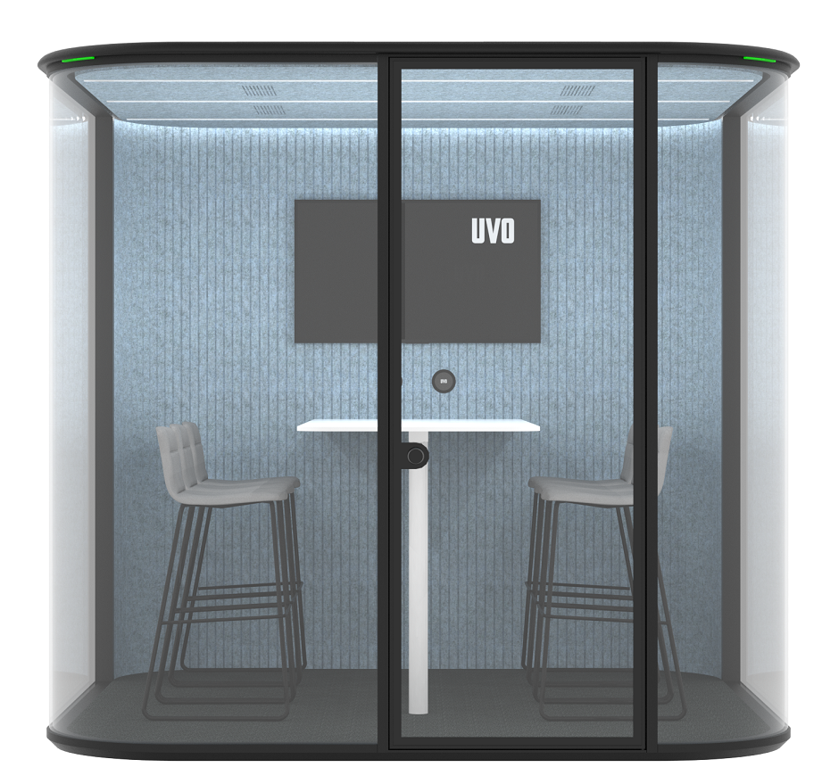
Share your meeting occupancy, destination market, electrical requirements and target installation date with UVO Acoustic Pods. Request the model-level acoustic report, certificate scope and quotation for the exact configuration.
Contact: Walter | Email: walter@uvo.hk | Tel: +86 135 7050 2710 | WhatsApp: +852 5748 4105 | Website: www.uvoin.com
UVO catalogue PDF: UVO Operable Wall Catalogue 2025. For acoustic pod documents, ask UVO for the model-specific datasheet and certificate package.
Have Questions or Need More Details?
Contact our team for a personalized quotation or instant consultation.
Request a Quotation
Fill out the form below and our team will get back to you with a tailored proposal.
WhatsApp Direct Chat
Prefer to chat in real-time? Message us on WhatsApp for instant assistance & quick answers.
- Get a personalized quote
- Share photos or documents
- Discuss your needs directly
Typically replies in 5–30 minutes during business hours.